

How to restore opaque headlights?
If your headlights have become cloudy over time, it's essential to have them restored to ensure safe driving, especially at night. Here's how you can restore the clarity and brightness of your headlights.
Why are my car headlights becoming opaque?
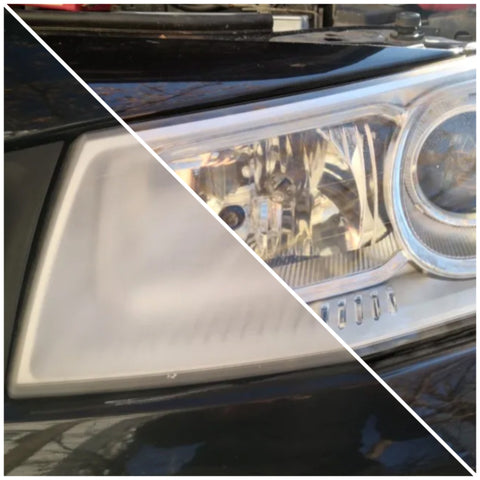
Headlight polymerization generally refers to the process by which the clear plastic lenses covering car headlights become cloudy or yellowed over time. This phenomenon is not a chemical reaction, but rather a physical change that occurs as a result of prolonged exposure to the sun's ultraviolet (UV) rays .
Lenses are typically made from polycarbonate , a thermoplastic polymer composed of repeating units of bisphenol A and phosgene. When exposed to UV rays, the polymer chains in the plastic can break down and become fragmented, resulting in a loss of transparency and discoloration of the material.
Opaque headlights for the vehicle inspection
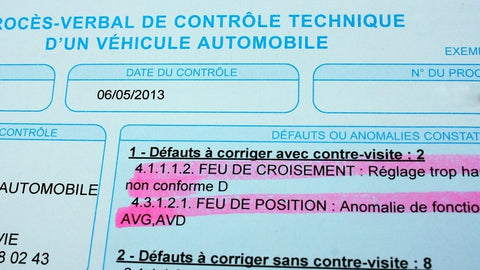
It is crucial to note that opaque headlights can result in a failed vehicle inspection. Indeed, opaque headlights compromise visibility and road safety, which is contrary to road safety standards established by inspection bodies.
Therefore, it is essential to clean cloudy headlights to avoid failing your vehicle inspection and ensure safe driving. By restoring dull headlights and keeping them clear and transparent, drivers can not only comply with legal requirements but also improve their own safety and that of other road users.
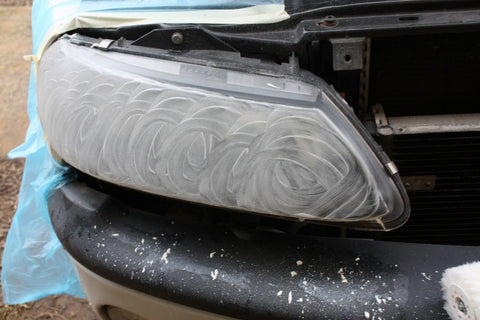
How to renovate your headlights yourself?
It's very easy to restore cloudy headlights yourself using a restoration kit that includes sandpaper and a product for cloudy headlights, also known as a polymerizing headlight restorer . The process involves the following steps:
- Cleaning the headlights : Use soap and water to remove any dirt or debris from headlights that have become opaque.
- Protect the headlights : Apply masking tape around the headlights to protect the paint and surrounding trim.
- Polishing your car headlights : Use fine grit sandpaper (approximately 400) to sand the surface of the headlights, taking care to sand evenly and avoid creating uneven scratches or spots.
- Polishing your headlights : Repeat the sanding process with progressively finer sandpaper (approximately 800, 1000 and 2000) until the surface of the headlights is smooth and uniform.
- Applying the headlight restorer by polymerization : Once your headlights have been polished, clean them again to remove any remaining dirt. Then apply the restorer to the headlight surface using the applicator, making circular motions to remove any remaining scratches or imperfections.
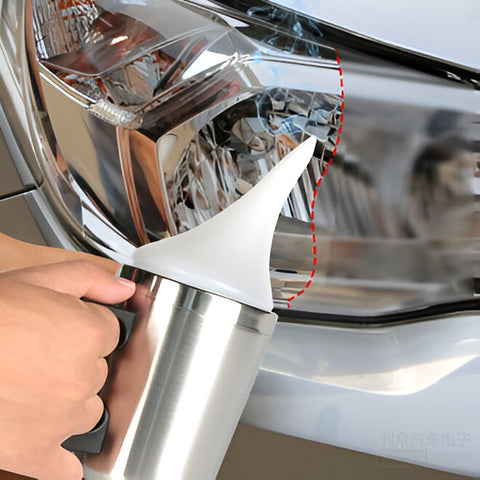
Advantages of headlight polymerization
- Limited cost : Headlight curing is generally less expensive than traditional headlight polishing, especially when done professionally. Even if you do it yourself, the cost of equipment can be prohibitive, particularly when using an orbital or dual-action polisher.
- A much simpler process : Polishing and varnishing headlights can be a complex process requiring specialized equipment and expertise. DIY kits may be available, but the process can still be difficult for beginners.
If you wish to take the plunge and easily renovate your headlights, we recommend purchasing a headlight restoration kit using polymerization, available in our online store .